
New Delhi [India], August 14: India’s hospitality sector is one of the country’s most extraordinary contradictions. The market is projected to reach $798.95 billion by 2033, growing at over 14% annually. Domestic tourist visits crossed 2.9 billion in 2024. Hotels are opening at a pace that would have seemed ambitious a decade ago. And yet, the industry faces a 55-60% shortfall in skilled manpower a gap so structural that the World Travel & Tourism Council places India as the country with the second-largest projected hospitality labour shortfall in the world by 2035.
Hotels keep building. Restaurants keep opening. The workforce keeps arriving undertrained.
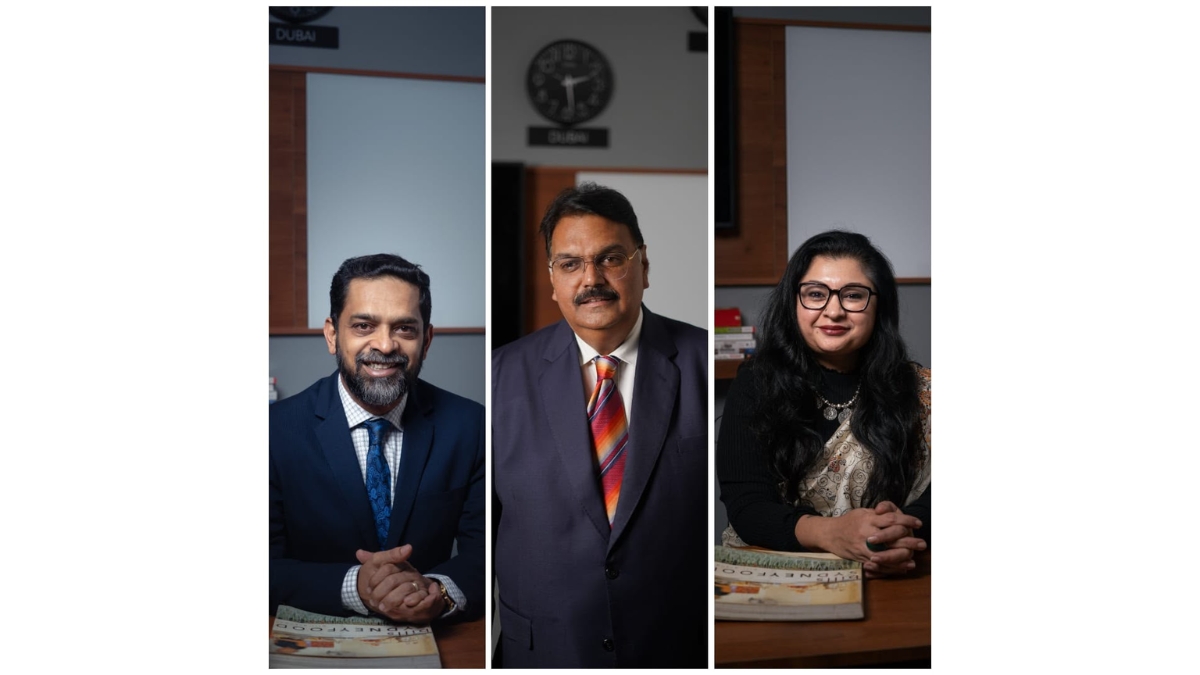
Into this gap, in January 2021, walked three people who had spent the better part of their careers not building training companies, but running the very operations that needed them.
The Practitioners Who Switched Sides
Brendon Pereira spent over two decades navigating the full arc of India’s hospitality industry from Manager Food & Beverage at Le Meridien and The Orchid Ecotel to Unit Manager at TGI Fridays, from Operations Manager at Reliance Industries to Vice President of Corporate Planning at Dusters Total Solution Services, and eventually to CFO of an NSE-listed company. He holds an MBA from SPJIMR, an MDP from IIM Ahmedabad, and CFA Level 1 credentials more commonly found in investment banking than in hospitality training.
Krishna Shantakumar spent 30 years doing something different: building restaurants that people remember. As the architect behind Bangalore’s The 13th Floor, ASEAN On The Edge, Ebony, and a portfolio of award-winning F&B establishments under the Aswati Group, he became one of the most respected operational voices in South India’s dining industry. He is also a published food writer whose work has appeared in leading Indian newspapers and journals.
Rashmi Koppar’s career ran a parallel course. After stints at Taj Hotels and Oberoi, where she absorbed the operational rigour that defines India’s finest hospitality brands, she spent 27 years at Ramaiah University of Applied Sciences in Bengaluru, rising from faculty to Professor, Head of Department, University Secretary, and ultimately Deputy Registrar. Her academic credentials include a Master’s in Tourism Management, a Postgraduate in HR, and ongoing PhD research.
Three careers. Three industries: hotel operations, F&B consulting, and academia. One diagnosis: India’s hospitality sector was growing at a pace its training infrastructure could not match, and the people building that infrastructure had largely never worked a service shift in their lives.
“The training companies sending programmes to hotels had built curricula from textbooks,” Pereira says. “We built ours from experience from the kitchen, from the floor, from the pre-shift briefing, from the 11 PM complaint from a guest that nobody had prepared the team to handle.”
In 2021, they built Adevo Academy.
The Infrastructure Behind the Idea
What distinguishes Adevo from the dozens of soft-skill and hospitality training companies that populate the Indian market is not its founders’ credentials, impressive as they are. It is the architecture they built around a specific belief: training without operational systems produces performance that lasts three weeks, not three years.
Adevo’s model operates across four pillars. The first is physical academy training, delivered from their flagship facility in Bengaluru, a purpose-built environment that includes a fully operational training restaurant and a functional housekeeping laboratory. The second is on-site training deployed directly at client premises. The third is a live LMS platform at lms.adevo.in, hosting over 100 modular courses across F&B service, kitchen operations, housekeeping, food safety, bakery, and leadership, available in English and Indian regional languages. The fourth is consulting: SOP development, L&D programme design, performance management systems, and full-cycle L&D outsourcing for clients who want to eliminate the overhead of an in-house training function entirely.
The client list that has accumulated around this model is, by any measure, striking for a bootstrapped company that is barely four years old. The Phoenix Mills Limited. General Mills India, for whom Adevo designed and delivered an upskilling programme for 6,000 bakeries across India, trained 64 GMI chefs under a Train the Trainer format, and built seven content modules covering sales, sanitation, product knowledge, and inventory management. Kempegowda International Airport, Bengaluru, where Adevo developed SOPs for the passenger services vertical. Table Space, where they delivered operational training across six Indian cities. And a roster of Bangalore’s most recognised F&B names: Toit, The 13th Floor, ASEAN On The Edge, Chianti Ristorante, Radio Bar, Credvest, and Sally’s, among others.
The outcomes are not anecdotal. Karthik Namdev, Director at Kling Brewery & Kitchen, is direct about the impact: his property now consistently maintains a 4.8-plus rating on Google following Adevo’s service training intervention. That number specific, public, trackable is the kind of metric that training companies almost never produce, because almost none of them measure outcomes with the discipline that a CFO would demand.
Pereira demands it.
The Second Academy
Perhaps the most revealing indicator of Adevo’s ambitions is not in Bengaluru, but in Toranagallu a steel town in Bellary district, Karnataka, where JSW Foundation partnered with Adevo to establish a community hospitality training academy. Here, rural youth from districts with virtually no prior exposure to the organised hospitality sector are being trained for careers in hotels, restaurants, and F&B service.
India’s hospitality growth is not playing out evenly; the market operates more like a collection of distinct markets, with every 100 kilometres bringing changes in language, cuisine, and culture. Adevo’s Toranagallu model is a direct response to that fragmentation: building a talent pipeline from communities that the industry has consistently overlooked, in a format that the industry has consistently underfunded.
Where It Goes From Here
Forty-one percent of Indian accommodation businesses are now planning to increase investment in staff development, a number that suggests the market Adevo is addressing is not just real, but accelerating. The company is currently developing an AI-powered menu training tool designed for restaurant floor staff, multilingual, contextual, and built for the distributed, high-turnover nature of India’s F&B workforce.
Geographic expansion into Mumbai and Hyderabad is on the roadmap. A growing digital course library, vernacular content capability, and the early architecture of what could become India’s most recognised hospitality training platform are already in motion.
None of this was inevitable. What made it possible was a decision made by three people who understood, at a level that only practitioners can, that India’s hospitality sector was not suffering from a lack of talent. It was suffering from a lack of systems.
They spent decades building the operations. They are now building the systems.
And the industry, finally, appears to be paying attention.
Adevo Academy (95hm Learning Solutions Pvt Ltd) is headquartered in Bengaluru, Karnataka. The company operates physical training academies in Bengaluru and Toranagallu, and an LMS platform at lms.adevo.in. Contact: contact@adevo.in| +91 76767 31148 | www.adevo.in
(The article has been published through a syndicated feed. Except for the headline, the content has been published verbatim. Liability lies with original publisher.)